
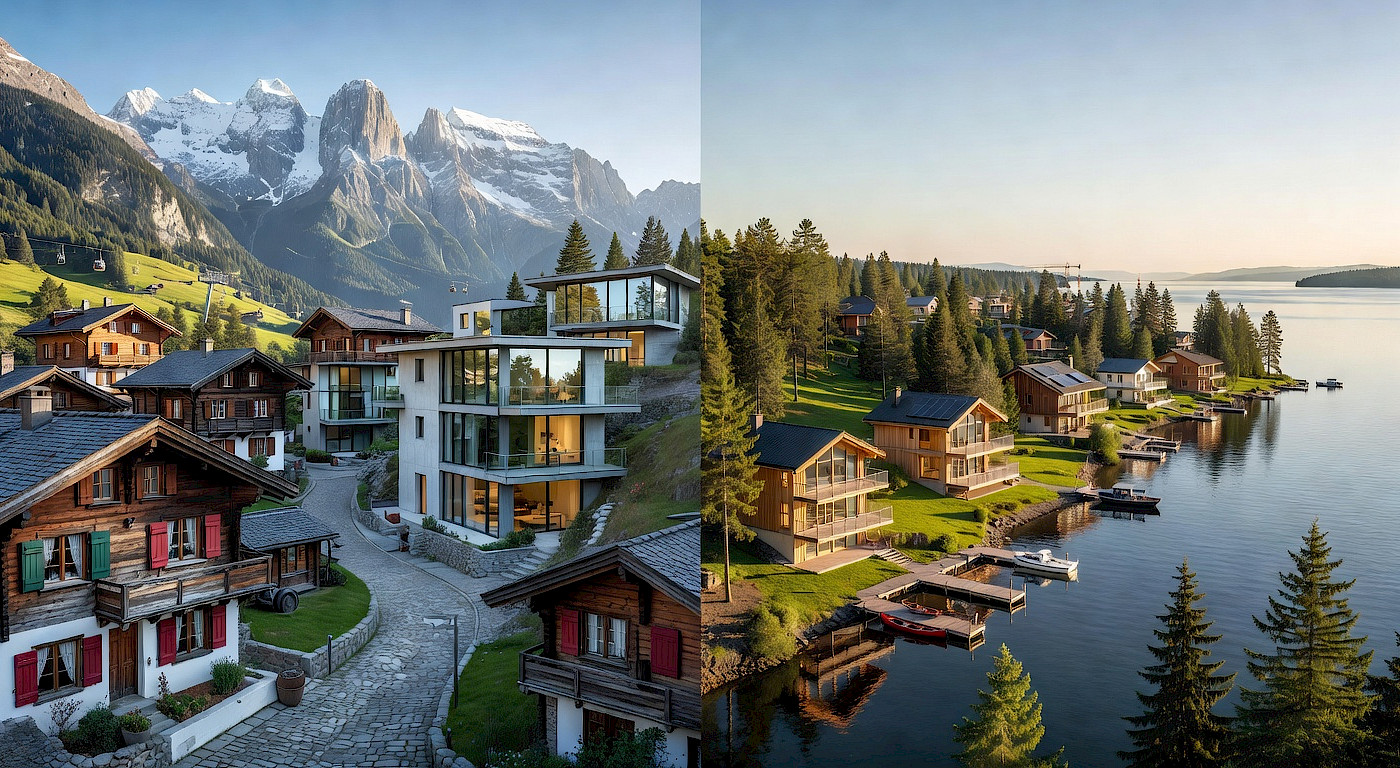
Two countries, two very different property markets. We compare Switzerland and Canada across the key factors that matter most to international buyers and investors.
Two Countries, Two Opportunities
Switzerland and Canada occupy very different positions on the global property map, yet both continue to attract serious international interest in 2026. Whether you are drawn to the Alpine stability of Ticino or the urban energy of Montreal, understanding the key differences between these two markets is essential before making a decision of this magnitude.
Market Stability
Switzerland is widely regarded as one of the world's most stable property markets. Low inflation, a strong currency, and a consistently undersupplied housing market have kept values resilient through multiple global cycles. Canada, and Montreal in particular, offers a different kind of stability — underpinned by strong population growth through immigration, robust rental demand, and a diversified urban economy that has proven resistant to prolonged downturns.
Entry Prices & Affordability
Switzerland commands a premium. Prime residential property in Lugano or Locarno will typically require a significantly higher capital outlay than a comparable property in Montreal. For buyers with a more flexible budget, Canada offers genuine value — particularly in Montreal, where prices remain far more accessible than in Toronto or Vancouver while delivering a comparable urban lifestyle.
Rental Yields
On a pure yield basis, Montreal currently holds the advantage. Strong rental demand, a large tenant population, and relatively accessible purchase prices combine to produce gross yields that comfortably outpace those achievable in Swiss cities. Swiss properties, by contrast, tend to be held for long-term capital preservation rather than income generation — a different investment philosophy rather than a weakness.
Legal Framework for Foreign Buyers
Paragraph: Switzerland imposes restrictions on property purchases by foreign nationals under the Lex Koller legislation, which limits non-resident buyers to certain categories of property in designated areas. Canada has its own evolving regulatory landscape, including recent measures affecting foreign buyer activity in some provinces. In both cases, working with an experienced local agent is essential to navigating the legal framework confidently.
Lifestyle Considerations
Paragraph: Switzerland offers unrivalled natural beauty, political neutrality, exceptional infrastructure, and one of the highest standards of living in the world. Ticino adds a Mediterranean warmth that sets it apart from the rest of the country. Montreal, meanwhile, delivers a cosmopolitan urban experience with a distinctly European flavour — world-class dining, a thriving arts scene, excellent universities, and a welcoming, multicultural character that makes relocation feel natural.
Our Verdict
There is no single right answer — the best market for you depends entirely on your goals. If long-term capital preservation, lifestyle quality, and Alpine living are your priorities, Ticino is hard to beat. If you are seeking stronger rental returns, greater affordability, and the energy of a major North American city, Montreal deserves serious consideration. Estatlio has active portfolios in both markets and our advisors are ready to help you make the right choice.